


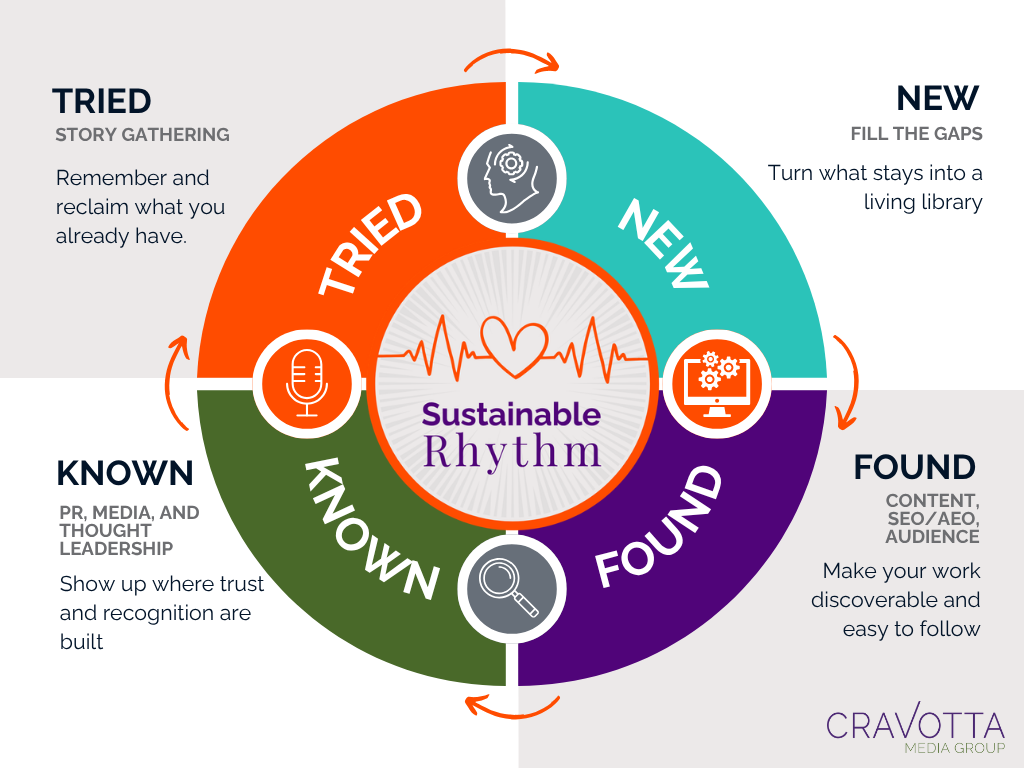
Of the four parts of this methodology, Found is the one people resist the most.
They’ll sit with me through story gathering. They’ll do the work from Article 7: You Are NOT the Hero... It’s All About Your Audience. Most people actually enjoy that part because they feel the human connection and realize there is so much more to connecting with their people.
Then we arrive at search, SEO, AI, structure, and discoverability, and the energy changes immediately.
It suddenly feels too technical. Too far outside their zone of genius. The response is usually some version of: “No way. This is not my thing.”
But take a stroll with me for a moment. Let me show you what I see and why this matters.
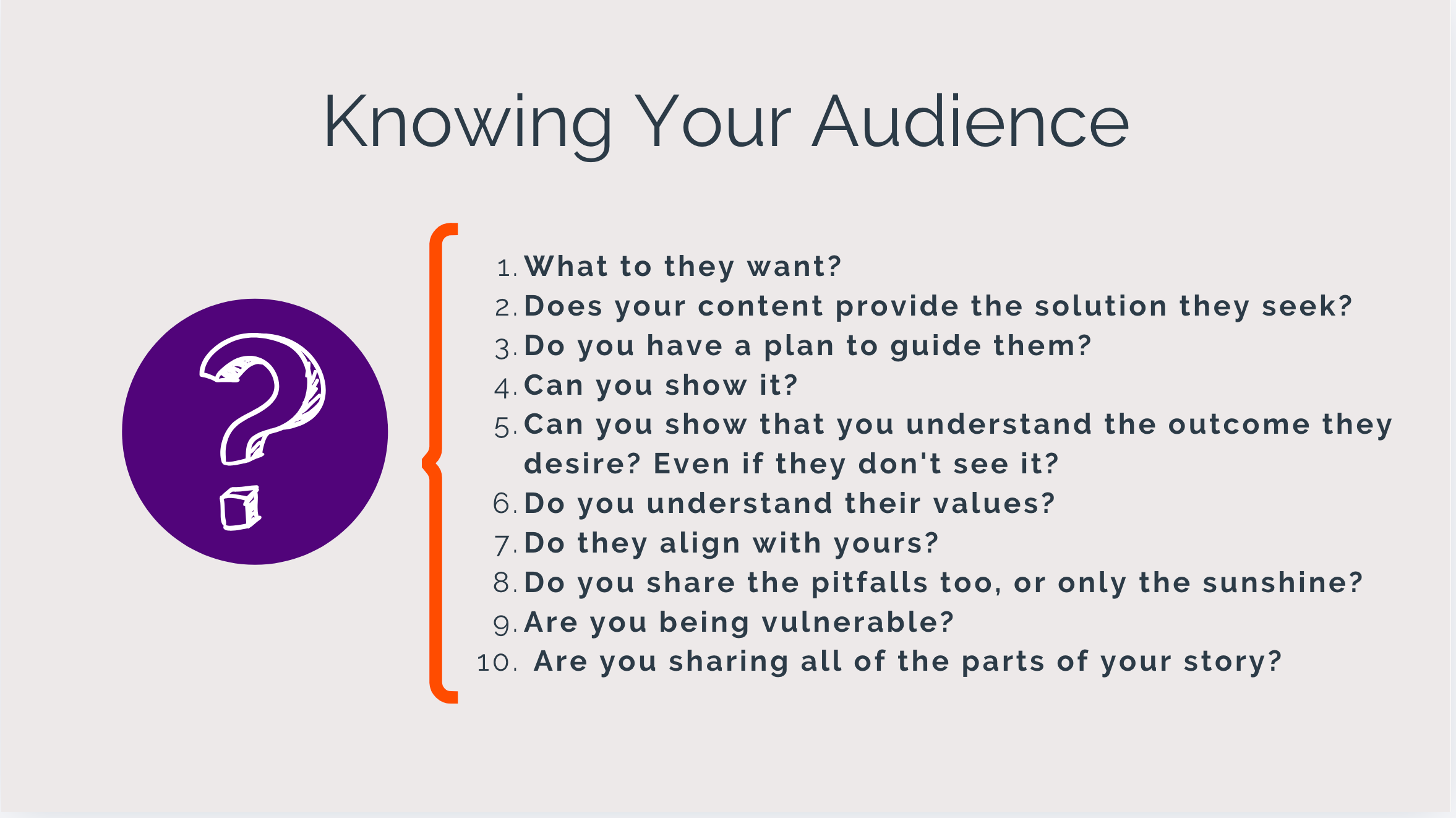
This is still audience work.
It’s rooted in listening, empathy, and understanding how humans search for help, clarity, reassurance, language, or solutions.
We are simply learning how to structure content so humans and bots can both understand it.
This part is critical because unless people can find your work, everything you pour into your content sits in the dark.
The internet is too crowded and noisy now for “post more and hope” to be a strategy.
Getting louder is not the answer. Going deeper is.
Invest the time to understand your audience deeply enough to create content that answers the questions they are already asking and structure it in ways that make it easier to find.
That strategy withstands change.
Know someone who would enjoy this article and series?
Humans first. Always.
Before we go any further, this is the principle underneath everything in this article:
We are creating content for humans and for bots — search engines, AI systems, platform search — but humans always come first.
If your content becomes technically optimized but emotionally empty, you lost the plot.
We are not going to focus on manipulating algorithms. They change too often, and none of us can keep up. Or want to.
Instead, let’s focus on continually listening to our audience and creating content that helps them. That is the reason why we do any of this in the first place.
Think of technology as the side dish. The human connection is the meal.
This work does not need to be expensive, outsourced, or overly technical. Most of the shift is about rethinking your relationship with your own content and the tools we use.
That’s what this article is inviting you to do.
Search changed. Human behavior didn’t.
For years, most people thought about search as “Google.”
You typed something into a search bar. You clicked a blue link. If you were lucky, you got past the ads and found a useful website.
That model still exists, but it is no longer the whole picture.
People now search everywhere for answers: ChatGPT, Claude, Gemini, Perplexity, Reddit, LinkedIn, TikTok, YouTube, podcast apps, Amazon reviews, Substack, Facebook groups, voice assistants, and the list keeps growing.
Search is no longer a destination. It’s a behavior.
And increasingly, people are getting answers without ever clicking through to a website.
This is what people mean when they talk about “no-click search.”
AI systems summarize information. Platforms surface answers directly. Search engines pull snippets into results pages. People often get what they need without leaving the platform they started on.
There’s a lot of panic around this, especially from companies built around traffic acquisition and advertising revenue.
But for smaller businesses, experts, educators, and creators, like us, this shift can be an advantage. Because for us, it was never really about the click.
It was about answering the question and making a difference.
The businesses and creators who adapt best to this shift understand that visibility always came from creating clear, useful, trustworthy content across an entire ecosystem—not from obsessing over one webpage.
What AEO and GEO mean
The internet loves turning normal ideas into intimidating acronyms.
AEO stands for Answer Engine Optimization. GEO stands for Generative Engine Optimization.
Both sound much more technical than they actually are.
At their core, they simply mean creating content that clearly answers the kinds of questions people are already asking online so search engines and AI systems can better understand, surface, summarize, and reference your work.
That’s it.
I’ve been teaching versions of this for fifteen years, it’s been called Search Listening.
The principle has never changed: listen for the questions and answer them clearly.
And when the technology starts to feel overwhelming, come back to the simplicity.
This is just a conversation.
One of my favorite ways to explain this is with a grocery store metaphor. Imagine you’re standing in line and the two people in front of you are talking about something you know all about.
Can you stay out of that conversation?
Probably not.
You naturally want to help.
The internet is one giant Q&A
Every search is a person trying to figure something out.
Sometimes the questions are practical. Sometimes they are emotional. Usually they are both.
People search for:
information
reassurance
relief
validation
direction
possibility
proof they are not alone
This is where most content falls apart.
It answers categories. Humans search for experiences. That means stories.
Traditional SEO advice may tell you to optimize for “menopause symptoms.”
But real people search: “Why do I suddenly smell maple syrup?” “Why am I angry all the time?” “Why can’t I move my shoulder?” “Why do I feel completely different from who I was five years ago?” “Why am I successful and still unhappy?”
Those are entirely different conversations.
And if you are someone with real expertise in that area, you probably have meaningful answers to all of those questions.
Now imagine your content was structured around those exact questions:
as article headings
LinkedIn posts
podcast topics
Substack essays
FAQ sections
YouTube titles
workshop themes
That creates an ecosystem of discoverability around the actual experiences your audience is having.
Nothing overly technical. You’re answering questions to feed the never-ending online Q&A.
This is why understanding your audience matters far more than chasing algorithms.
Search is everywhere
One of the biggest mindset shifts people need to make is understanding that search no longer happens solely on websites.
Every platform is part of your discoverability ecosystem.
Your LinkedIn posts are searchable. Your podcast descriptions are searchable. Your YouTube transcripts are searchable. Your comments are searchable. Your Substack posts are searchable.
Anywhere humans can type or speak eventually becomes searchable.
This is why your visibility strategy can no longer rely on:
one homepage
one funnel
one viral post
one SEO strategy from 2016
Your entire body of work matters now.
And this is important because many people still evaluate content only through visible engagement metrics.
A social media post with few comments is not necessarily a failed post.
People search privately. Quietly. Indirectly.
Search behavior often reveals things people would never publicly admit in a comment section.
Someone may find your content through search six months after you publish it, read it silently, feel understood, and never leave any visible trace behind.
That does not mean the content failed.
It means human behavior is more nuanced than internet metrics.
Three paths that work together
Before we go deeper into structuring content, I want to simplify SEO as much as possible.
I’ve always described SEO as a garden with three paths: on-page, off-page, and technical.
On-page SEO is the content itself: your words, structure, headings, links, and topics.
Off-page SEO is reputation: mentions, backlinks, guest features, podcasts, reviews, media coverage, and the ways other people reference your work.
Technical SEO is functionality: site speed, mobile experience, accessibility, security, and clean site structure.
Most small businesses do not need to become technical experts in any of these areas.
But they do need to understand that discoverability is cumulative.
No single thing changes everything. Consistent small actions add up.
The clearer your content is, the easier it becomes to reference and share. The more connected your ecosystem becomes, the easier it becomes for humans and AI systems to understand your expertise over time.
And… Repeating yourself is a good thing.
When you consistently show up around the same themes and topics, it builds authority, trust, and recognizability.
You do not need to reinvent yourself constantly. Start with what you already know.
One of my go-to content planning strategies is to pick a topic per month - then focus most of your content around that one topic. This builds your authority and credibility around one topic, makes consistency easier, and makes you more findable. An added bonus. You can use the same plan next year, take a different approach to the same topics, or go deeper. You’re building architecture around the topics that make up your work.
Credibility cannot be faked
Google uses a framework called E-E-A-T: Experience. Expertise. Authoritativeness. Trustworthiness.
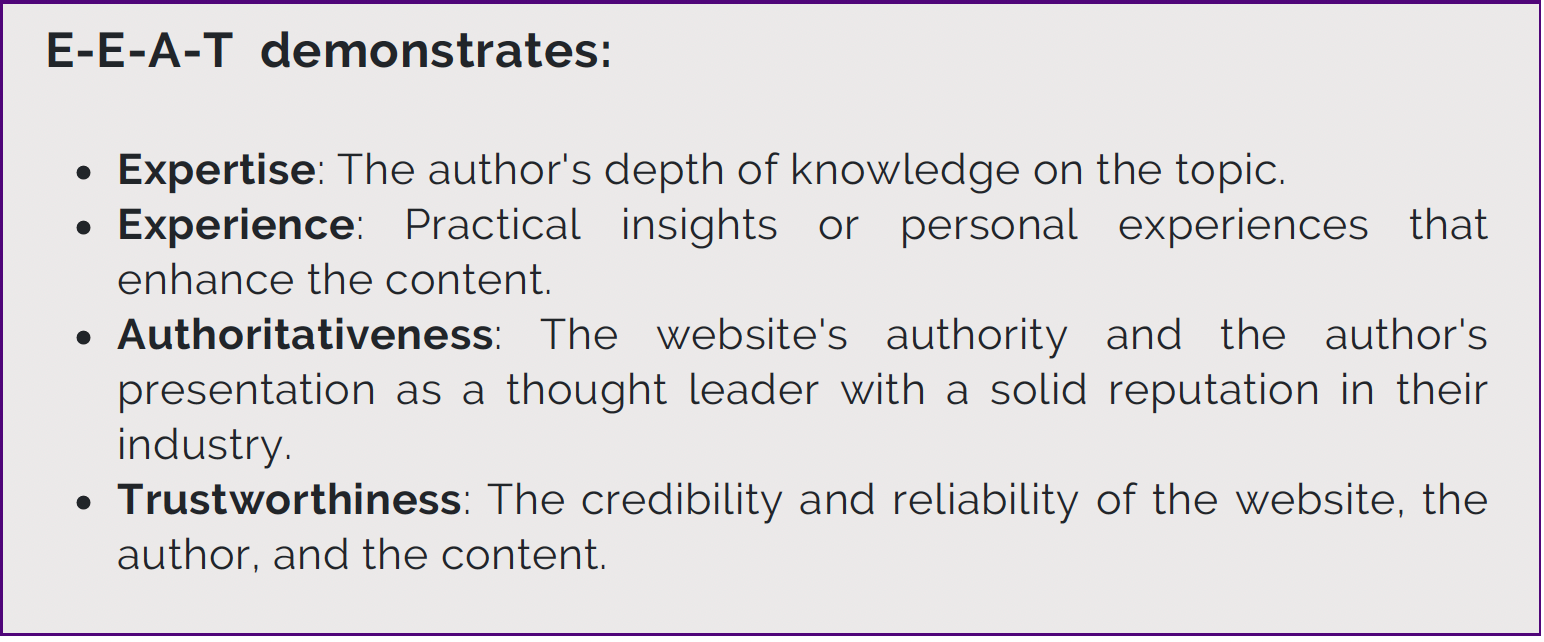
People often treat this like a checklist to perform. Don’t.
Instead, create content rooted in your actual experience.
What have you already lived through? What can you talk about for hours? What do people consistently come to you for help with? What do you know deeply enough to explain clearly?
That is the material.
You build trust through:
lived experience
clarity
specificity
consistency
usefulness
recognizable expertise
In many ways, AI systems are increasingly trying to evaluate the same things humans evaluate naturally: Does this person sound credible? Clear? Useful? Trustworthy?
And once again, all of this traces back to questions.
Search engines and AI systems are constantly trying to match questions with the most useful answers they can find.
Keyword research still matters
Some people claim keyword research is dead.
It isn’t.
We still need to understand the language people use when searching for solutions.
The best place to find those words is often inside conversations you are already having with your audience.
Years ago, I started teaching something I called Internal Keyword Research.
Most keyword research starts externally: What ranks? What trends? What gets traffic?
But some of the most valuable language already exists inside your own ecosystem:
client conversations
emails
comments
DMs
reviews
interviews
sales calls
community discussions
The words people use when they finally feel understood are often your most powerful keywords.
And you can usually feel it when you hear them.
This is the piece many technical SEO conversations miss: search behavior is emotional behavior.
People search for what they care about. What scares them. What confuses them. What they secretly hope for at 2AM.
When you listen to your audience, you’re listening to their nervous system.
Spoiler alert: AI does not have a nervous system.
Use listening tools
Beyond your own audience conversations, there are tools that help you see the exact phrases people type into search engines.
Two I’ve used for years are: Answer The Public and Answer Socrates.
Both have limited free plans, affordable paid options, and are incredibly useful.
You type in a topic, and they show you real questions people are asking around it.
Those questions can become:
article headings
structured content
podcast topics
workshop ideas
FAQ sections
social content
video titles
newsletter themes
Over time, those ideas begin gathering around your name and your work.
That builds authority. Credibility. Trust. And discoverability.
The analog click
There’s another version of search people rarely talk about: the direct click.
The person who hears you on a podcast and types your name into Google. Scans your QR code after a talk. Finds an old PDF you wrote. The referral from a friend saying: “You should talk to her.”
These actions often carry little or no attribution data, but they’re more valuable because they represent human interest. Someone learned about you and intentionally typed your name somewhere.
Word of mouth is still one of the strongest discoverability systems. Don’t lose it in the tech.
Structure is not about robots. It’s about clarity.
Now let’s talk about structure.
This is one of the most overlooked parts of content creation, and it can immediately improve the experience for both human readers and search systems.
Use the questions and keyword phrases you fine in:
headings
subheadings
questions
descriptive titles
concise summaries
quote boxes
internal and external links
highlighted text
image alt text
video titles and descriptions
Why does this matter?
Because humans scan before they read. Search engines and AI systems do too.
A tired human looking for an answer behaves surprisingly similarly to a search engine: both are trying to quickly determine:
what this is about
whether it feels relevant
whether it seems trustworthy
whether it answers the question they came with
Good structure helps readers navigate your ideas more easily.
And for search engines, text that is called out in some way is wrapped in code. When a bot searches the content, the first thing it will see is the text wrapped in code.
That is why structured content performs better. Not because it is robotic. Because it stands out.
The PR Connection
According to a Muck Rack article on GEO, PR professionals are uniquely positioned to lead in this new landscape. Why? Because AI engines heavily weigh information from trusted, authoritative sources.
Here’s how PR amplifies your visibility strategy:
Authoritative coverage: When your expertise is featured in respected online media outlets, AI systems are more likely to cite you as a credible source. This is far more powerful than just having content on your own website.
Consistent messaging: AI looks for consensus and patterns. When the same key facts and phrases about you appear across multiple trusted sources, they’re more likely to be included in AI responses. Repetition is a good thing. You can repurpose and upcycle content you already have in so many ways.
Expert positioning: Being featured as a thought leader through guest articles, podcast interviews, and speaking engagements builds your personal authority, something AI increasingly recognizes.
Third-party validation: When others talk about your expertise, it speaks louder than when you claim it yourself. PR creates this external validation that AI systems value.
The article emphasizes that “It is no longer enough to aim for a single standout hit or viral press release. What matters is a pattern, dozens or hundreds of reinforcing data points, statements, and narratives spanning earned media (PR), owned content (your content), and referenced expertise.”
In Article 9: Known – The Human Connection - PR, Podcasts, Speaking, Relationship Media - we will talk about all of this.
Found
We are still writing for humans.
That was true before AI. It is still true now.
The technology changed. Human behavior did not.
People are still looking for someone who understands what they mean — even when they struggle to explain it themselves.
Your job is not to outsmart the algorithm.
Your job is to understand your audience enough to:
recognize the questions they are asking
use language they actually use
structure your ideas clearly
create content useful enough to deserve being found
help them feel seen and understood
Because content that cannot be found cannot help the people who need it most.
That is the entire point.
-Donna


